Here to help: 0161 518 0825 | info@gofirstaid.co.uk
Anaphylaxis
Anaphylaxis is a severe allergic reaction that can happen quickly and can be life-threatening. Learn how to recognise the signs, use an adrenaline auto-injector and respond with confidence.
5/28/20263 min read
Spotting an emergency
Most of us know someone with an allergy.
For many people, allergies are manageable day-to-day, but sometimes an allergic reaction can become much more serious.
A severe allergic reaction, known as anaphylaxis, can develop quickly and requires immediate action.
The difference between panic and confidence often comes down to one thing:
Knowing what to do next.
What is anaphylaxis?
Anaphylaxis is a severe, potentially life-threatening allergic reaction.
It happens when the body’s immune system reacts strongly to a trigger, causing symptoms that can affect breathing, circulation and the skin.
Common triggers can include:
Foods such as peanuts, tree nuts, milk, eggs or shellfish
Insect stings
Certain medicines
Latex
Anaphylaxis can happen suddenly, and symptoms can progress quickly.
What does anaphylaxis look like?
Recognising the signs early is important.
Symptoms can include:
Airway and breathing:
Swelling of the tongue or throat
Difficulty breathing
Wheezing
Tightness in the throat
Circulation:
Feeling faint
Dizziness
Collapse
Pale, clammy skin
Skin:
Hives or raised rash
Flushing
Swelling
Other symptoms:
Vomiting
Stomach pain
A sudden feeling that something is seriously wrong
Not every reaction looks the same, which is why confidence and awareness matter.
What should you do if someone is having anaphylaxis?
The key message:
Act quickly.
If someone is having a severe allergic reaction:
1. Use adrenaline if available
Adrenaline is the first-line emergency treatment for anaphylaxis.
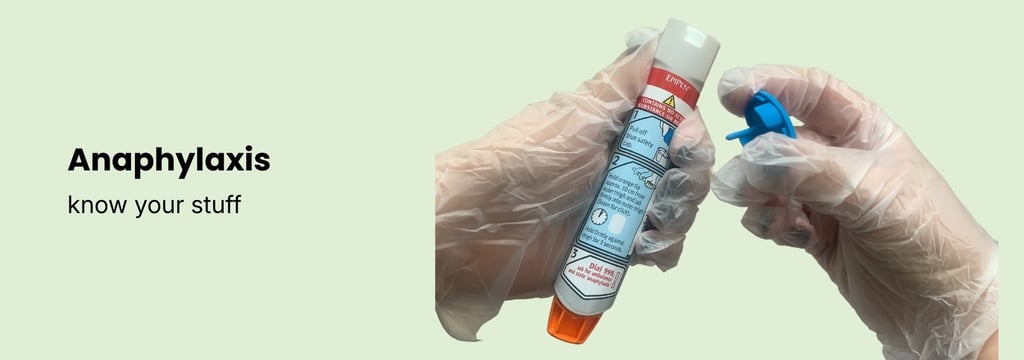
If the person has an adrenaline auto-injector (AAI), such as an adrenaline pen, it should be used without delay if anaphylaxis is suspected.
You do not need to wait for symptoms to become severe
2. Call 999
Anaphylaxis is a medical emergency.
Even if adrenaline appears to improve symptoms, emergency help is still needed.
3. Position the person correctly
This is an important step that many people don’t know.
The person should lie flat with their legs raised
If they are struggling to breathe, they may sit up with their legs extended.
They should not stand up or walk around, even if they start to feel better.
What is an adrenaline auto-injector?
An adrenaline auto-injector (AAI) is a device designed to quickly deliver adrenaline during a severe allergic reaction.
It is usually prescribed to people who are at risk of anaphylaxis.
Common devices in the UK include adrenaline pens such as:
EpiPen
Jext
The important thing is not just carrying one, it is knowing when and how to use it.
“But what if I use it and I’m wrong?”
This is one of the biggest reasons people hesitate.
They worry:
“What if I don’t need to?”
“What if I make things worse?”
“What if I use it incorrectly?”
But when anaphylaxis is suspected, delaying treatment can be dangerous.
Allergy UK’s guidance highlights the importance of giving adrenaline without delay when a severe allergic reaction is suspected.
In an emergency, confidence matters.
Why first aid training matters
Anaphylaxis is one of those emergencies where people often say:
“I wouldn’t know what to do.”
And that is exactly why training matters.
A good first aid course doesn’t just teach you facts.
It helps you recognise what is happening, understand the steps, and feel confident enough to act.
Because when someone is struggling to breathe, they don’t need someone searching for answers.
They need someone who knows what to do next.
Anaphylaxis in schools, nurseries and workplaces
For organisations, this knowledge is especially important.
- A child having a reaction in a nursery.
- A colleague reacting to food in the workplace.
- A customer becoming unwell in a public setting.
Emergencies can happen anywhere.
Having people who understand allergies and know how to respond creates a safer environment for everyone.
The takeaway
You don’t need to be a medical professional to help someone having an allergic reaction.
You need:
Awareness
The confidence to act
The knowledge of the right steps
Because in an emergency, calm and confident action can make all the difference.
Sources
Anaphylaxis UK
Allergy UK
Resuscitation Council UK – 2025 First Aid Guidelines (Anaphylaxis section)
Ready to Learn More?
heading
Looking for first aid training in Greater Manchester? Get in touch with GO! First Aid and we'll help you find the right course or training option.
GO! First Aid
0161 5180825
info@gofirstaid.co.uk
First aid training across Greater Manchester
© 2026. All rights reserved. VAT No. 254490693



Home