Here to help: 0161 518 0825 | info@gofirstaid.co.uk
EFAW vs FAW: What’s the Difference?
Here’s a simple, no-jargon guide to help you choose the right first aid course for your workplace / setting.
Gemma Johnson-Davies
6/15/20262 min read
Let’s clear this up
If you’re trying to book first aid training, you’ve probably hit the same question everyone else does:
“Do we need Emergency First Aid at Work or First Aid at Work?
They sound almost identical but they’re not.
And choosing the wrong one usually means either overpaying… or not having enough cover when it actually matters.
So here’s a simple breakdown, no jargon, no confusion.
Emergency First Aid at Work (EFAW)
This is a 1-day course designed to give people the confidence to step in during the most common emergencies.
It focuses on the moments that really matter:
Someone stops breathing
Someone is choking
Someone is bleeding heavily
Someone has collapsed
It’s practical, hands-on, and designed to make people feel calm instead of panicked.
First Aid at Work (FAW)
This is the full 3-day course.
It goes deeper and prepares people for a wider range of situations, especially in higher-risk workplaces.
Alongside everything in EFAW, it also covers:
Broken bones and spinal injuries
Heart attacks and strokes
Head, neck and back injuries
Asthma, epilepsy, diabetes
Managing more than one casualty
It’s for when you need people who can confidently handle more complex situations.
The simple difference
EFAW: “I can help in an emergency”
FAW: “I can handle a wider range of emergencies confidently”
Both are practical. Both are hands-on. Both are designed to take the fear out of first aid.
Which one do you need?
There’s no one-size-fits-all answer, it depends on your workplace.
Generally:
Offices, gyms, small retail → usually EFAW
Construction, manufacturing, larger or higher-risk sites → usually FAW
But the real answer comes down to your risk assessment.
A quick reality check
Most people don’t struggle with first aid because they lack knowledge. They struggle because they’ve never practised it in a realistic way. That’s why good training matters, it should feel real, interactive, and confidence-building, not like sitting in a lecture.
Not sure? That’s normal.
If you’re unsure which course fits your team, that’s exactly what we help with. We’d rather guide you to the right course than sell you the wrong one.
Next step
If you want clarity, or want to book training for your team:
Enquire about group training or book onto an open course today.


Ready to learn more...

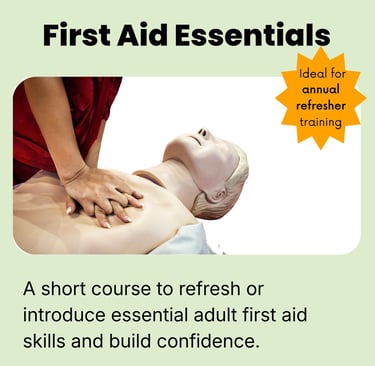

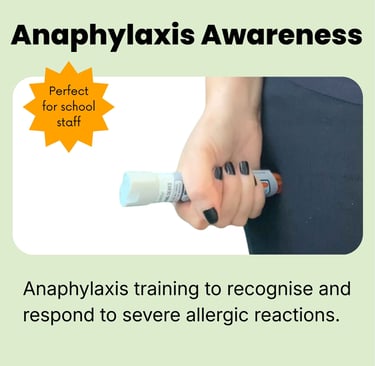

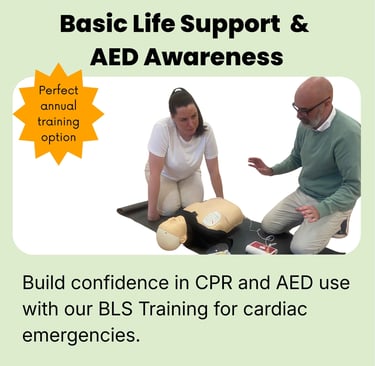
Looking for first aid training in Greater Manchester? Get in touch with GO! First Aid and we'll help you find the right course or training option.
GO! First Aid
0161 5180825
info@gofirstaid.co.uk
First aid training across Greater Manchester
© 2026. All rights reserved. VAT No. 254490693


Home